GuidesAI and e-commerce
AI for e‑commerce: the use cases that pay off
Where AI pays off first: the catalogue
A store’s time is spent in product pages. It is also where AI helps most.
- Titles and descriptionsRewritten in the words customers type, from the specifications supplied by the supplier.
- AttributesMaterial, dimensions, compatibility, extracted from free text and put in the right fields.
- TranslationsA store in several languages without translating each page by hand.
- Image alt text
In every case, a human reviews. A wrong product page costs a return.
Running several stores
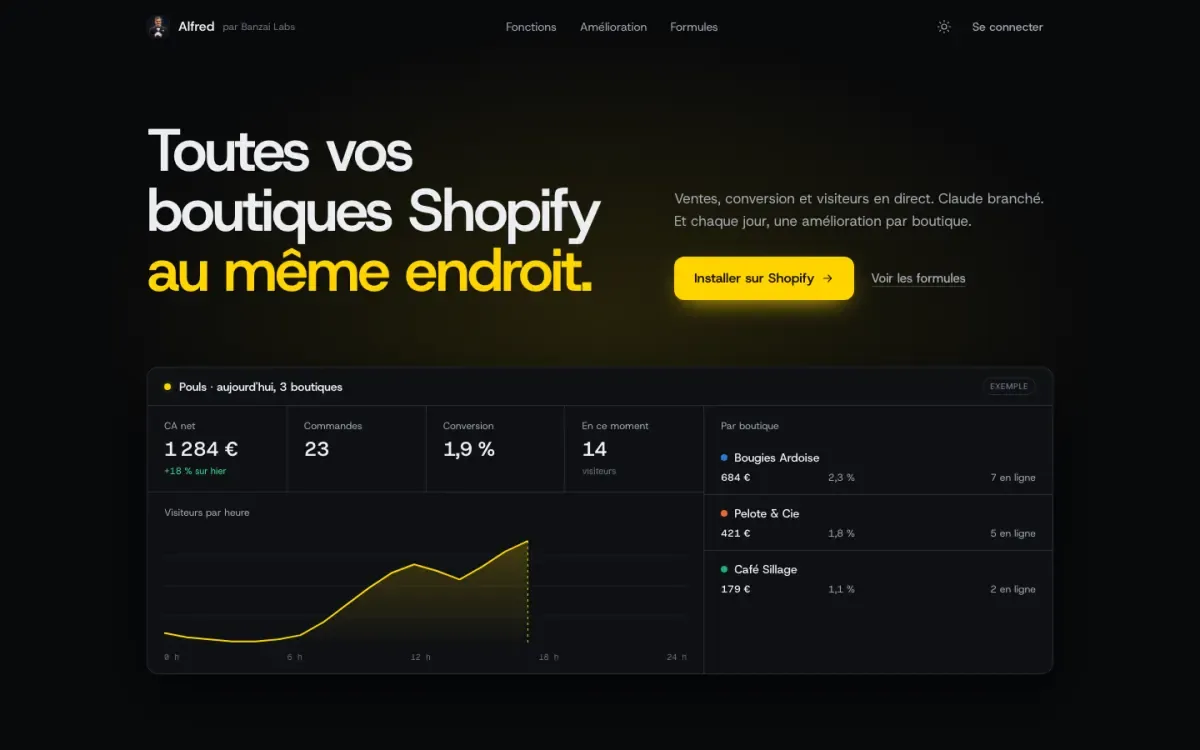
A merchant running several stores juggles a dozen tools and never sees the whole picture. That is the starting problem of our project Alfred.
What an agent does well here:
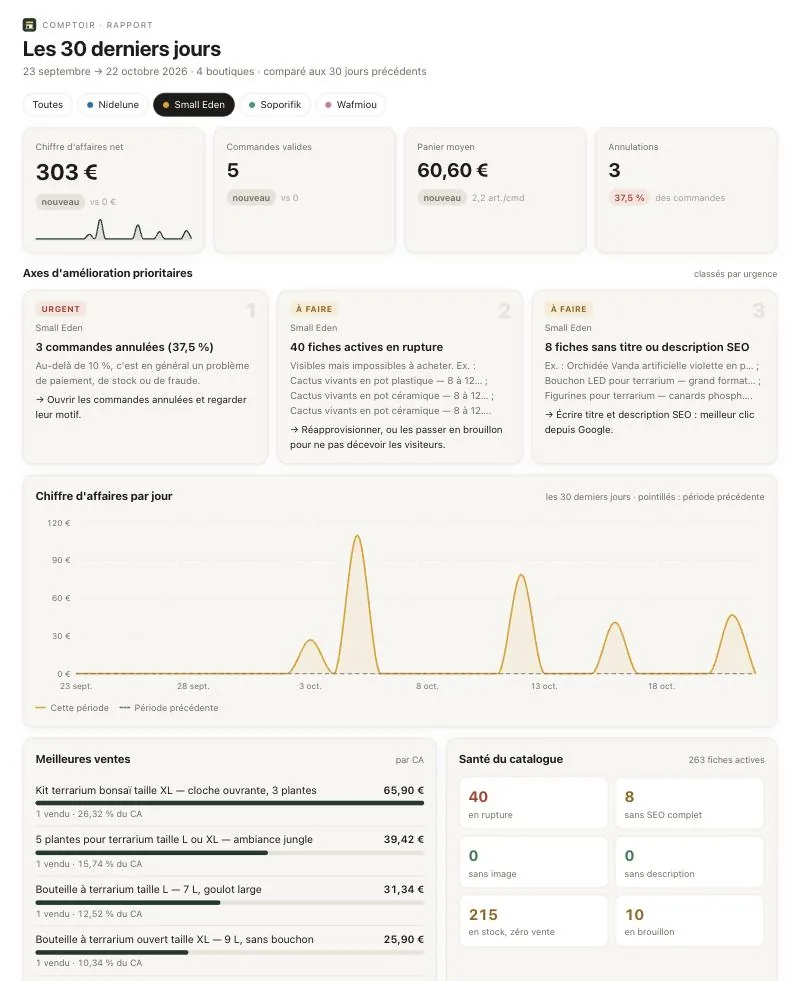
- automatic findings at each sync: stock-out, drop in conversion, loss-making ads, SEO problem;
- a morning brief and a Monday report;
- all under a capped budget.
And to act: Comptoir lets you change prices, stock, product pages and translations across all your stores from a conversation, in one request.
Customer service
An assistant that answers on delivery, returns and products, from your pages. It needs two things: up-to-date content, and access to order tracking. See AI chatbot for your website.
Advertising and the product feed
- The Merchant Center feedEnriched titles and complete attributes improve Shopping distribution.
- Campaign monitoringAn agent reconciles spend and margin, product by product.
- AdsText variants to test, written fast.
AI does not replace the profitability maths. See Google Ads for an online store.
Content
Buying guides, advice pages, FAQs per aisle. AI helps produce, not decide what to say. The content that ranks brings something others lack: your experience of the product. See SEO content with AI.
The order we recommend
- 1Reliable measurementWithout sales tracking, no agent can tell what works. See e-commerce tracking.
- 2CatalogueProduct pages, attributes, translations.
- 3MonitoringAutomatic findings and reports.
- 4ActionBulk changes, approved.
- 5Customer service
What AI will not do
- Choose your products and your positioning.
- Make up for mediocre photos or missed delivery times.
- Replace margin: a store that is unprofitable without AI stays so with it.
Precautions
- Never an invented claim: health, performance, origin.
- Prices and stock changed only with approval.
- A log of all changes, so you can roll back.
Frequently asked questions
- Where should an online store start with AI?
- With the catalogue. Complete titles and descriptions, rewritten in customers’ words, improve search, Google Shopping and conversion all at once. It is long work that AI speeds up a lot, with review.
- Can AI run advertising on its own?
- Platforms already automate bidding. An agent is mostly useful for watching: spotting products that spend without selling and flagging them. The decision to cut or raise a budget stays human at first.
- Do you need Shopify to use AI?
- No, but a platform with a complete API makes everything easier. The agent needs to read orders, stock and catalogue, and write to them with precise permissions.