GuidesAI automation
AI automation: which tasks to hand to an agent
Two different kinds of automation
Classic automation connects tools with rules: “when an order comes in, create an invoice”. It is reliable and costs almost nothing to run, as long as the data is clean and the cases are foreseen.
AI automation steps in where a rule is not enough: reading a message, understanding a request, drafting a reply, spotting an anomaly.
The right architecture uses both. Rules wherever possible, a model only where something has to be read or judged.
The tasks that suit it
| Family | Examples |
|---|---|
| Sorting | Qualifying incoming requests, classifying tickets, detecting urgency |
| Extracting | Reading invoices, purchase orders, forms, and filling in a tool |
| Summarising | Meeting notes, weekly digest, monitoring |
| Drafting | Standard replies, product pages, translations, reviewed by a human |
| Watching | Spotting a stock-out, a drop in conversion, a page that changed |
| Reconciling | Comparing two sources and flagging the gaps |
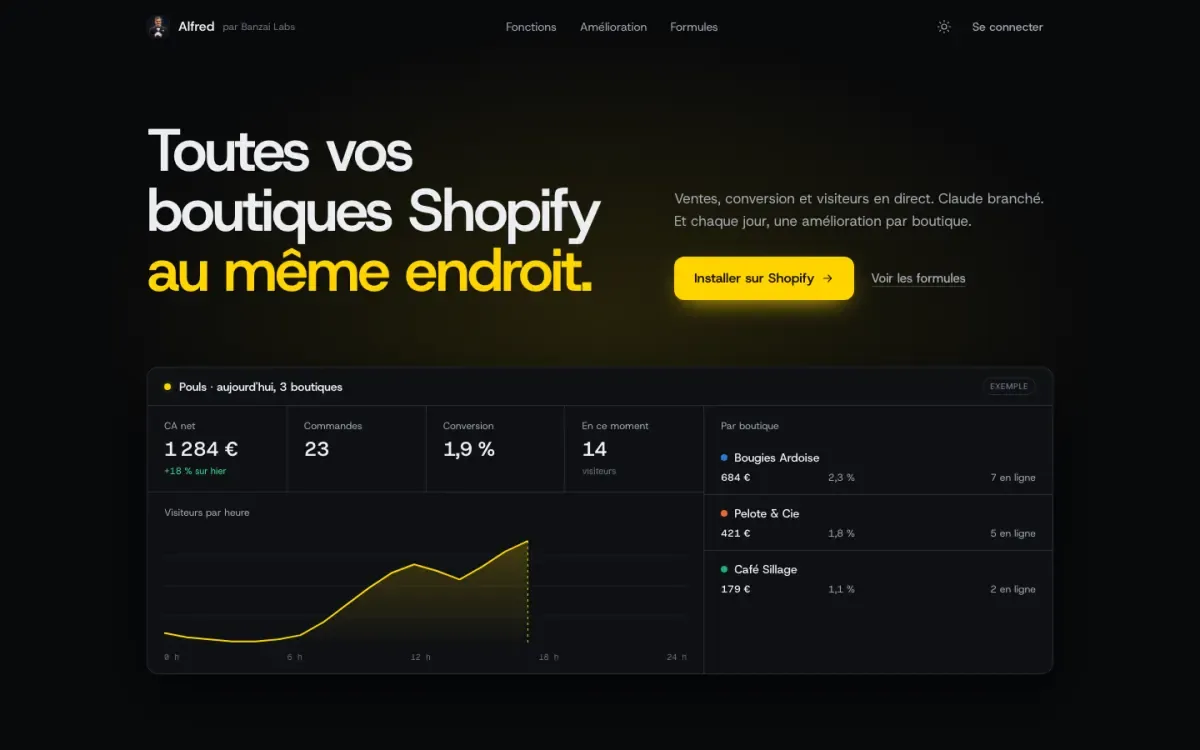
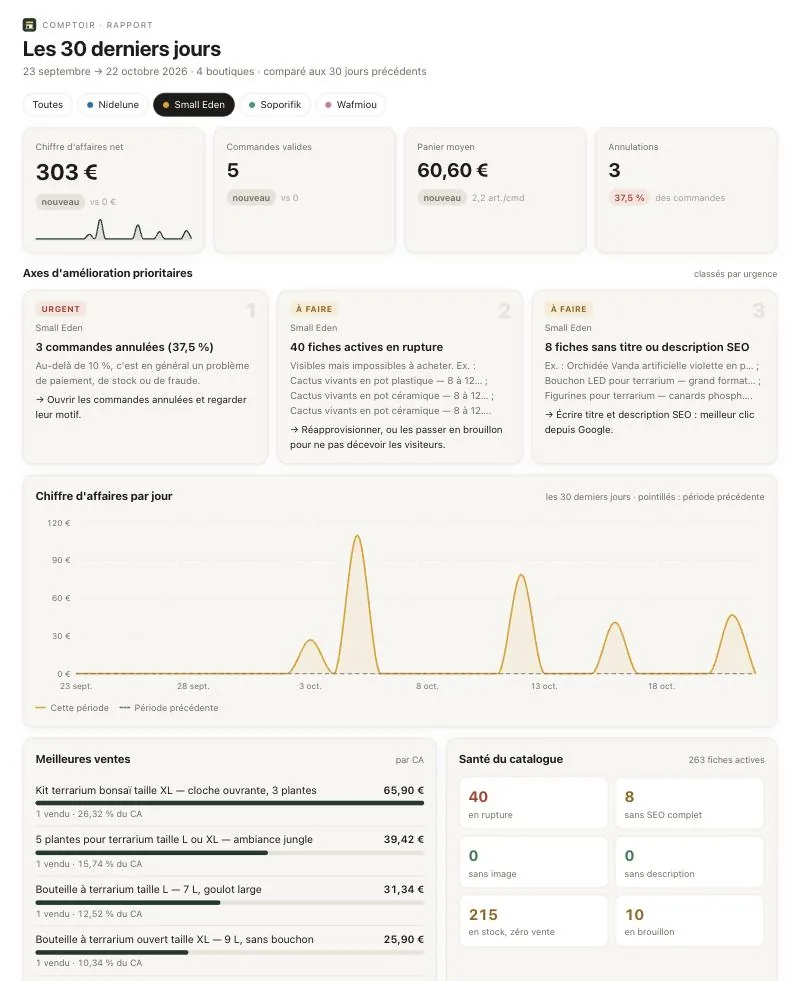
Our projects give real examples. Alfred produces findings at each store sync, a morning brief and a Monday report. Votons rereads every manifesto page each week and flags the slightest change.
The tasks not to automate
- What happens rarely.
- What commits the company without review: a quote, a legal answer.
- What nobody can judge as right or wrong.
- What relies on a process the team itself cannot describe.
The method
- 1Describe the taskAs you would explain it to a new colleague.
- 2Gather real casesWith the right answer for each.
- 3Build read-onlyThe agent proposes, a human approves.
- 4MeasureOn the real cases, then in real conditions for a few weeks.
- 5Grant permissionsOne by one, starting with what can be undone.
The guardrails
- A clear triggerA time, an event.
- A capped budgetSo that a runaway loop stops by itself.
- A logOf every action, open to inspection.
- Human approvalBefore anything that cannot be undone.
- A named ownerFor each automation.
With which tools
Two routes exist: no-code platforms such as n8n or Make, and custom development. We compare them in n8n, Make or custom code.
Where to start
With a report. It is the ideal task: it comes back every week, it changes nothing, and everyone sees the result. To choose the next ones, see the AI audit.
Frequently asked questions
- What is the difference between classic automation and AI automation?
- Classic automation applies fixed rules to structured data. AI handles free text and unexpected cases: understanding an email, summarising a document, choosing a category. The two are combined.
- Does AI automation replace jobs?
- It mostly removes tasks. In the projects that work, people keep the decision and the relationship, and lose the copy-pasting, the sorting and the compiling.
- What happens when the automation gets it wrong?
- It must be designed for that: reversible actions at first, human approval before anything that cannot be undone, a log of every action, and an alert when the result is out of the ordinary.