GuidesMVP
Building an MVP with AI: testing your idea in a few weeks
What an MVP must prove
An MVP is not there to show off a technology. It is there to answer a question: do people want this, enough to use it or pay for it?
Before building, write down:
- The hypothesisWho has this problem, and what do they do about it today?
- The single journeyThat solves it.
- The numberThat will say whether it is validated: sign-ups, repeat use, first payments.
What AI speeds up
- MockupsRealistic screens in hours rather than days.
- The clickable prototypeTo show before writing real code.
- Repetitive codeForms, admin screens, tests.
- Starter contentCopy, translations, sample data.
- Some product featuresThat would have required a whole team: natural-language search, summarising, classifying.
Our guide to AI-assisted development details what this changes for a team.
What AI does not speed up
- Finding the first users and talking to them.
- Deciding what is not in the first version.
- Topics where a mistake is expensive: payment, personal data, access rights.
- Store review for a mobile app.
The generated-prototype trap
A generation tool produces in one evening an application that looks like a finished product. Three problems then appear.
- 1SecurityExposed keys, missing access rights, an open database.
- 2UpkeepCode nobody has read is hard to evolve.
- 3The illusion of progressThe screen is there, but nothing has been checked with users.
The generated prototype is a good learning tool. It becomes a risk when real data goes into it without review.
The scope of a good MVP
| In the MVP | Afterwards |
|---|---|
| One complete journey | Secondary journeys |
| One platform: the web | The mobile app |
| One language | Translations |
| Simple payment | Subscriptions, promo codes |
| A minimal admin screen | Dashboards |
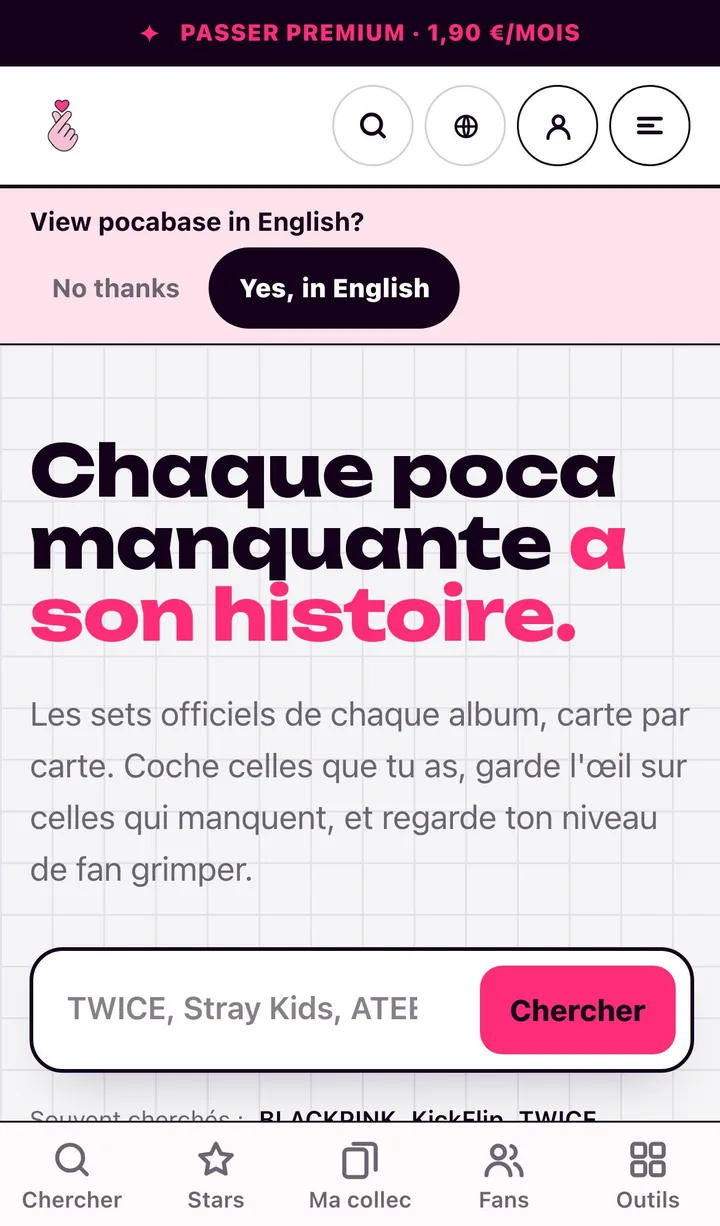
Pocabase illustrates the order: first the card sets to tick off in your collection, then the fan level, the premium plan and the languages.
An MVP whose core is an AI
When the product rests on a model, add three rules.
- Check by hand first. Before automating, do the work yourself for ten users. You will know what the model has to get right.
- Measure quality from day one, on real cases.
- Cap costs, because unexpected success is paid for by usage.
Moving from MVP to product
If the number is reached, consolidate before adding:
- review and test what was written fast;
- set up backups, error tracking and alerts;
- rework the data schema if it was improvised;
- only then, open the next features.
If the number is not reached, you have lost a few weeks and not a year. That is the point.
For scoping, see How to scope a digital project. For the technical follow-up, Building a custom AI application.
Frequently asked questions
- What is an MVP?
- A minimum viable product: the smallest version of a product that lets you check, with real users, that the need exists. It does one thing, all the way through.
- Can you build an MVP without a developer thanks to AI?
- A prototype, yes. Generation tools quickly produce an application you can show. For accounts, payments and real data, you need someone who can check security and how it holds up in production.
- How long does an MVP take?
- A few weeks for a well-held scope. If the estimate goes beyond three months, the scope is no longer that of an MVP.